Founder’s note
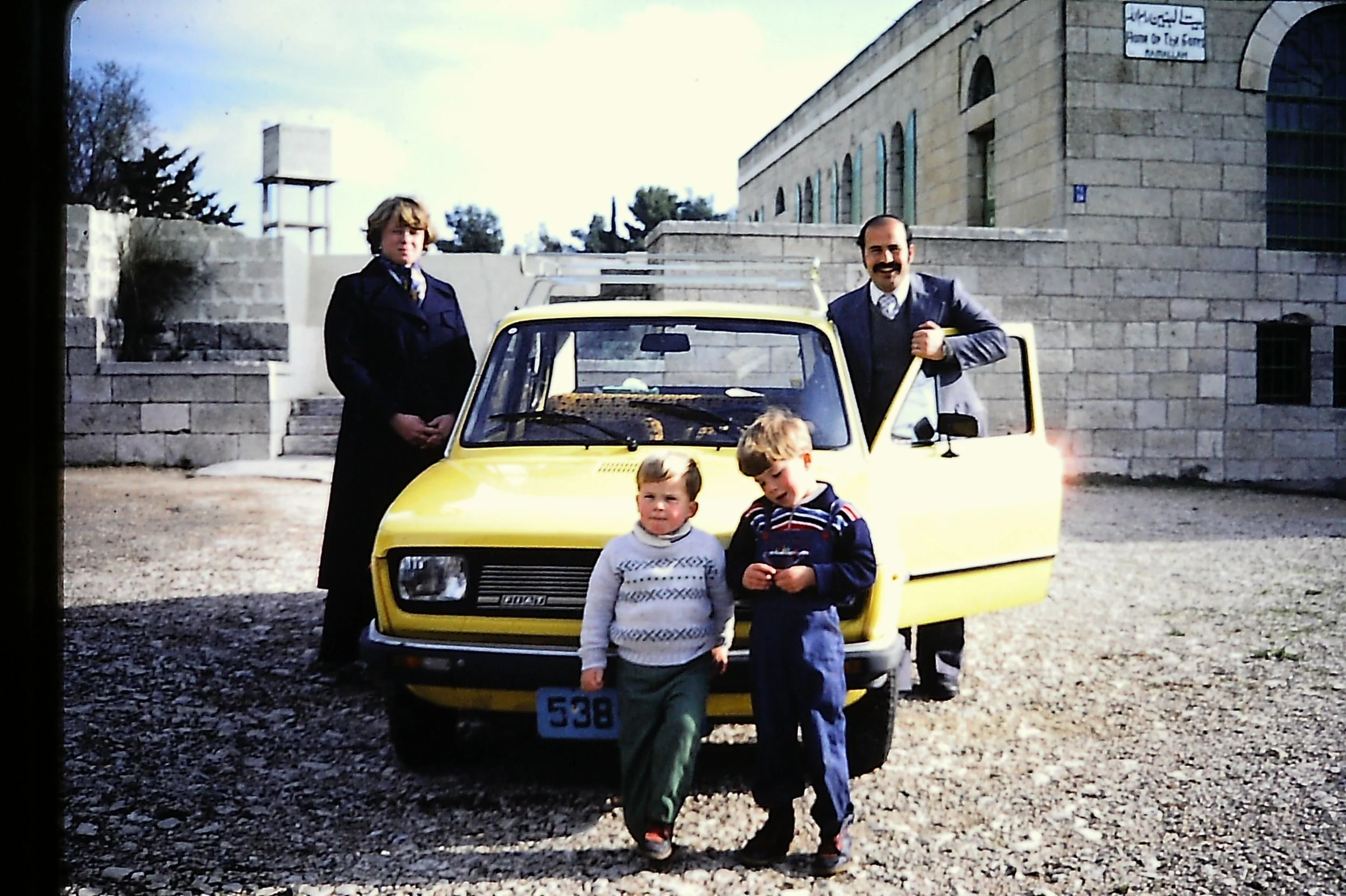
I Am From There. I Am From Here.
.أنا من هناك. أنا من هنا
Inspired by the words of the Palestinian poet Mahmoud Darwish
The odds of me being part of the Palestinian community are probably one in a million.
I was born in Minneapolis, Minnesota, to an American mom and a Jordanian dad. When I was two years old, my life took a turn that shaped everything that came after: my family moved to Ramallah in the West Bank, where I spent my childhood through high school.
From the moment I arrived, I was embraced as if I had always belonged.
I was never treated as an outsider. Never made to feel “different.”
I wasn’t a guest. I was just one of you.
Ramallah raised me. The people. The streets. The rhythm of daily life. The smell of coffee in the morning. Fresh bread. Conversations drifting through the neighborhood.
It was home.
Like many of us, life eventually pulled me elsewhere. After high school, I came to the U.S. for college. I built a life here. But Palestine never really left me.
You might know the story of a famous Palestinian leader who was rumored to be married to the Palestinian cause. I didn’t have that level of commitment. So I did the next best thing: I married a Palestinian woman.
Over the years, I’ve been very fortunate. Not just because of my paperwork or circumstances, but because I grew up during a time when traveling between cities and regions was far easier than it is today. Because of that, I’ve walked the streets of Ramallah, Jerusalem, Hebron, Nablus, Bethlehem, Nazareth, Jaffa, and Haifa. I’ve been to Gaza multiple times, and I’ve been to both the Mediterranean and the Red Sea.
It’s a beautiful land — yes.
But its greatest beauty has always been its people.
Their generosity. Their resilience. Their beautiful souls.
But if you’re Palestinian, you already know what I came to realize more deeply with time:
Many Palestinians don’t have that option.
For political, legal, financial, and very real reasons, going back isn’t simple. For many, it’s no longer even possible. Some don’t have the right IDs. Some can’t get permits. Some left and were never allowed to return. Some have never been allowed to go at all.
Home can feel close — and impossibly far — at the same time.
When I miss Ramallah, I do what many of us do. I recreate it.
I bring it into my home. Into my kitchen. Into my conversations.
And Darna is an extension of that.
I wanted to create a place here in Chicago where you could walk in and feel something familiar — even if you couldn’t quite put your finger on it. A place where the coffee smells right. Where the music feels right. Where you don’t have to explain yourself. Since many of us can’t go back to Ramallah, I wanted to bring Ramallah to you.
Darna means our home.
Not in a symbolic way — in a lived way.
This isn’t just a coffee house. It’s a place to gather, to remember, to connect. A place for Palestinians, for Palestinian-Americans, for friends, and for anyone who wants to experience Palestine through warmth, hospitality, and presence — not headlines.
If you’ve ever missed home, or felt caught between worlds, or just wanted a place where you belong without trying — Darna was built with you in mind.
Welcome to Darna.
You’re home.
— David (Abu Neda) Kakish